

Post Date: 19th February 2026
Refilling a traditional candle jar with candle sand is an excellent practice because it combines sustainability with creativity. Rather than discarding a high-quality glass jar, you give it a new life, reducing waste and the need to purchase new containers. It also allows for personalisation – layering different colours of sand or choosing decorative designs can turn a simple jar into a beautiful home accessory.
Materials Needed
- Traditional jar candle (glass)
- Spoon or butter knife
- Freezer
- Warm water (not boiling)
- Mild washing-up liquid
- Paper towels or microfibre cloth
- Rubbing alcohol (optional, for sticky residue)
- Simpsons of London Candle Sand
- New wick (with SOL candle sand packs)
- Chopstick or skewer (to keep the wick centred)
Step 1: Remove Old Wax
- Freeze the candle: Place the jar in the freezer for 1–2 hours.
- Pop out wax: Tap gently or use a wooden skewer or spoon to remove chunks.
- Scrape residue: Use a plastic or wooden spoon to remove leftover wax. Avoid metal – it can scratch the jar.
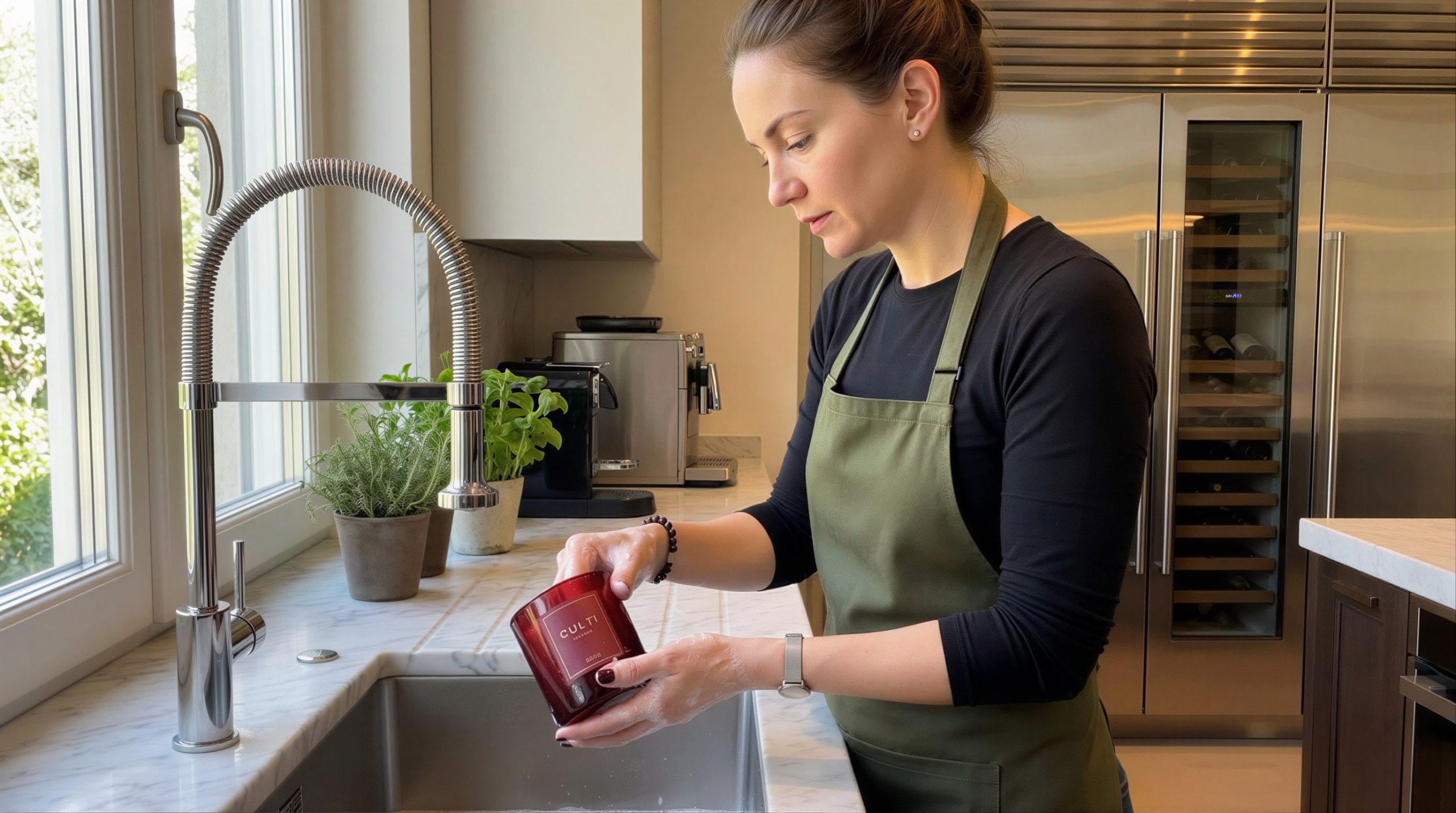
Step 2: Clean the Jar
- Warm water soak: Fill the jar with lukewarm water and a few drops of washing-up liquid.
- Leave to soak 10–15 minutes: This loosens any remaining wax.
- Gently scrub: Use a soft sponge to remove wax remnants.
- Sticky residue: Wipe with rubbing alcohol if needed.
Step 3: Dry the Jar
- Dry thoroughly with a lint-free cloth or paper towels.
- Make sure the jar is completely dry before adding sand. Moisture can cause the sand to clump or spoil decorative layers.
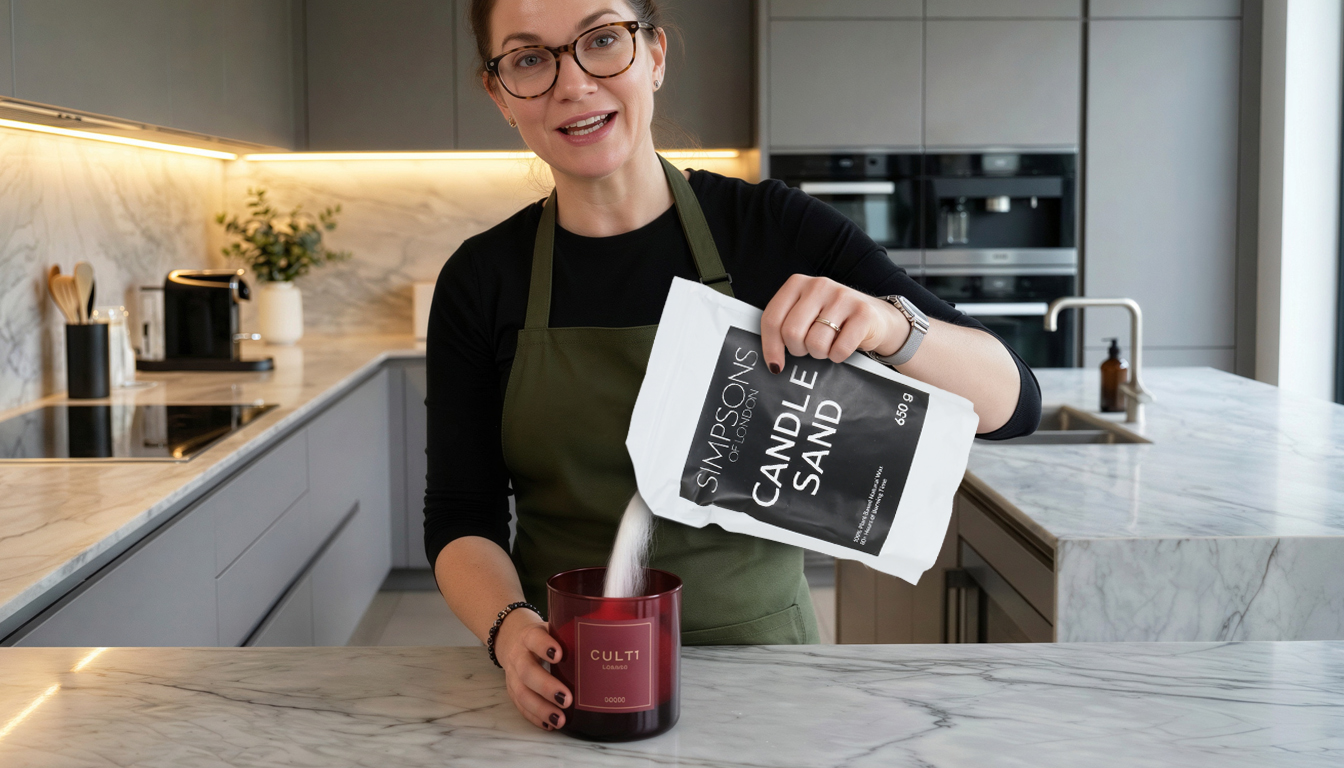
Step 4: Add Candle Sand
- Pour the Candle Sand slowly to avoid spillage.
- Tap the jar lightly to level the sand.
Step 5: Prepare the Wick
- Place the new wick in the centre of the jar.
- The wick should be 5–7 mm above the sand.
Step 6: Finishing Touches
- Wipe the outside of the jar to remove dust or sand.
- If using as a functional candle: light carefully, monitoring the first burn.
- If decorative only: your jar is ready to display!

Extra Tips
- Keep the jar dry between refills.
- Avoid overfilling – leave around 1 cm from the top.